
Applying Remote Design Thinking Methods to Remote Work Environments
In today’s fast-evolving business landscape, remote work has become more than just a trend - it’s a fundamental shift in how we operate. But how do we ensure that innovation and collaboration don’t fall by the wayside when teams are scattered across different locations? This is where remote design thinking methods come into play. By applying design thinking principles to remote work environments, we can unlock creativity, solve complex problems, and foster a culture of continuous improvement - no matter where we are.
Let’s dive into how we can harness these methods effectively, turning the challenges of remote work into opportunities for transformation.
Understanding Remote Design Thinking Methods
Design thinking is a human-centred approach to problem-solving that encourages empathy, ideation, and experimentation. Traditionally, it thrives in face-to-face settings where teams can brainstorm on whiteboards and prototype rapidly. But remote work demands a fresh take.
Remote design thinking methods adapt these principles to virtual spaces. They rely on digital tools, asynchronous communication, and structured processes to keep everyone engaged and aligned. Think of it as navigating a ship through foggy waters - you need clear instruments and a shared map to reach your destination.
Some key elements include:
Empathy through virtual interviews and surveys: Understanding user needs remotely requires creative approaches like video calls, online polls, and digital diaries.
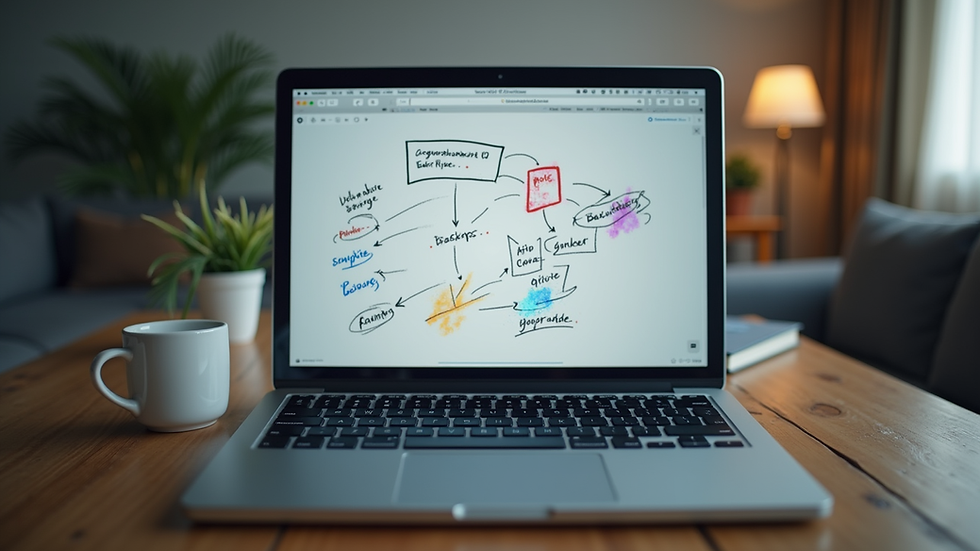
Collaborative ideation using online whiteboards: Tools like Miro or MURAL allow teams to brainstorm together in real-time or asynchronously.
Rapid prototyping with digital mockups: Instead of physical models, teams create wireframes, clickable prototypes, or storyboards.
Iterative testing via remote feedback sessions: Gathering input from users or stakeholders through video demos or surveys.
By mastering these methods, organisations can maintain momentum and innovation despite physical distance.
Practical Steps to Implement Remote Design Thinking Methods
Applying remote design thinking methods requires intentional planning and the right mindset. Here’s a step-by-step guide to get started:
Define the challenge clearly
Start by framing the problem in a way that everyone understands. Use simple language and focus on the user’s perspective. For example, instead of “Improve sales,” say “How might we make the online shopping experience more enjoyable for customers?”
Build empathy remotely
Schedule video interviews or send out surveys to gather insights. Encourage team members to share stories or observations from their own experiences. This builds a shared understanding of the problem.
Facilitate inclusive ideation sessions
Use digital whiteboards and set clear rules to ensure everyone’s voice is heard. Break larger groups into smaller teams to foster deeper discussions. Encourage wild ideas - sometimes the most unexpected concepts lead to breakthroughs.
Create low-fidelity prototypes
Use tools like Figma, Canva, or PowerPoint to quickly mock up solutions. These don’t have to be perfect; the goal is to visualise ideas and make them tangible.
Test and gather feedback
Share prototypes with users or stakeholders through screen sharing or recorded demos. Collect feedback via surveys or follow-up calls. Use this input to refine the solution iteratively.
Document and reflect
Keep track of learnings and decisions in a shared document or project management tool. Regularly reflect on what’s working and what needs adjustment.
By following these steps, teams can create a rhythm that supports innovation and continuous improvement, even when working remotely.
Overcoming Common Challenges in Remote Design Thinking
Remote work introduces unique hurdles that can hinder design thinking efforts. But with the right strategies, these obstacles become manageable.
Communication Gaps
Without face-to-face cues, misunderstandings can arise. To bridge this gap:
Use video calls to maintain visual connection.
Encourage clear, concise communication.
Summarise discussions and share notes promptly.
Time Zone Differences
Global teams may struggle to find overlapping hours. Consider:
Scheduling core collaboration times.
Using asynchronous tools like Slack or Trello.
Recording sessions for those who can’t attend live.
Technology Fatigue
Constant screen time can drain energy. Combat this by:
Limiting meeting lengths.
Incorporating breaks.
Mixing synchronous and asynchronous activities.
Maintaining Engagement
Remote sessions can feel less dynamic. Boost engagement through:
Interactive tools (polls, quizzes).
Rotating facilitators.
Celebrating small wins.
By anticipating these challenges, we can design remote work environments that support creativity and connection.

Enhancing Business Transformation with Remote Design Thinking
When organisations embrace remote design thinking methods, they position themselves for meaningful transformation. This approach aligns perfectly to help businesses define, implement, and optimise their operations for sustained growth.
Here’s how:
Customer-centric innovation: By empathising deeply with users, businesses create solutions that truly meet market needs.
Agile problem-solving: Iterative prototyping and testing accelerate decision-making and reduce risk.
Cross-functional collaboration: Remote design thinking breaks down silos, encouraging diverse perspectives.
Scalable processes: Digital tools and structured methods make it easier to replicate success across teams and locations.
Moreover, integrating remote design thinking applications into daily workflows can streamline operations and foster a culture of continuous learning. It’s like planting seeds in fertile soil - with care and attention, the organisation grows stronger and more resilient.
Cultivating a Culture That Supports Remote Design Thinking
Finally, the success of remote design thinking depends on culture. Organisations must nurture an environment where experimentation is encouraged, failure is seen as learning, and collaboration thrives.
To cultivate this culture:
Lead by example: Leaders should actively participate in design thinking activities and champion innovation.
Provide training and resources: Equip teams with the skills and tools they need to succeed remotely.
Recognise and reward creativity: Celebrate contributions and breakthroughs, no matter how small.
Encourage psychological safety: Create spaces where team members feel safe to share ideas and take risks.
By embedding these values, organisations create a fertile ground for remote design thinking to flourish, driving transformation and competitive advantage.
Remote work doesn’t have to be a barrier to innovation. By applying remote design thinking methods thoughtfully, we can turn distance into a catalyst for creativity and growth. Let’s embrace this journey together, transforming challenges into opportunities and building the future of work - one idea at a time.


Comments